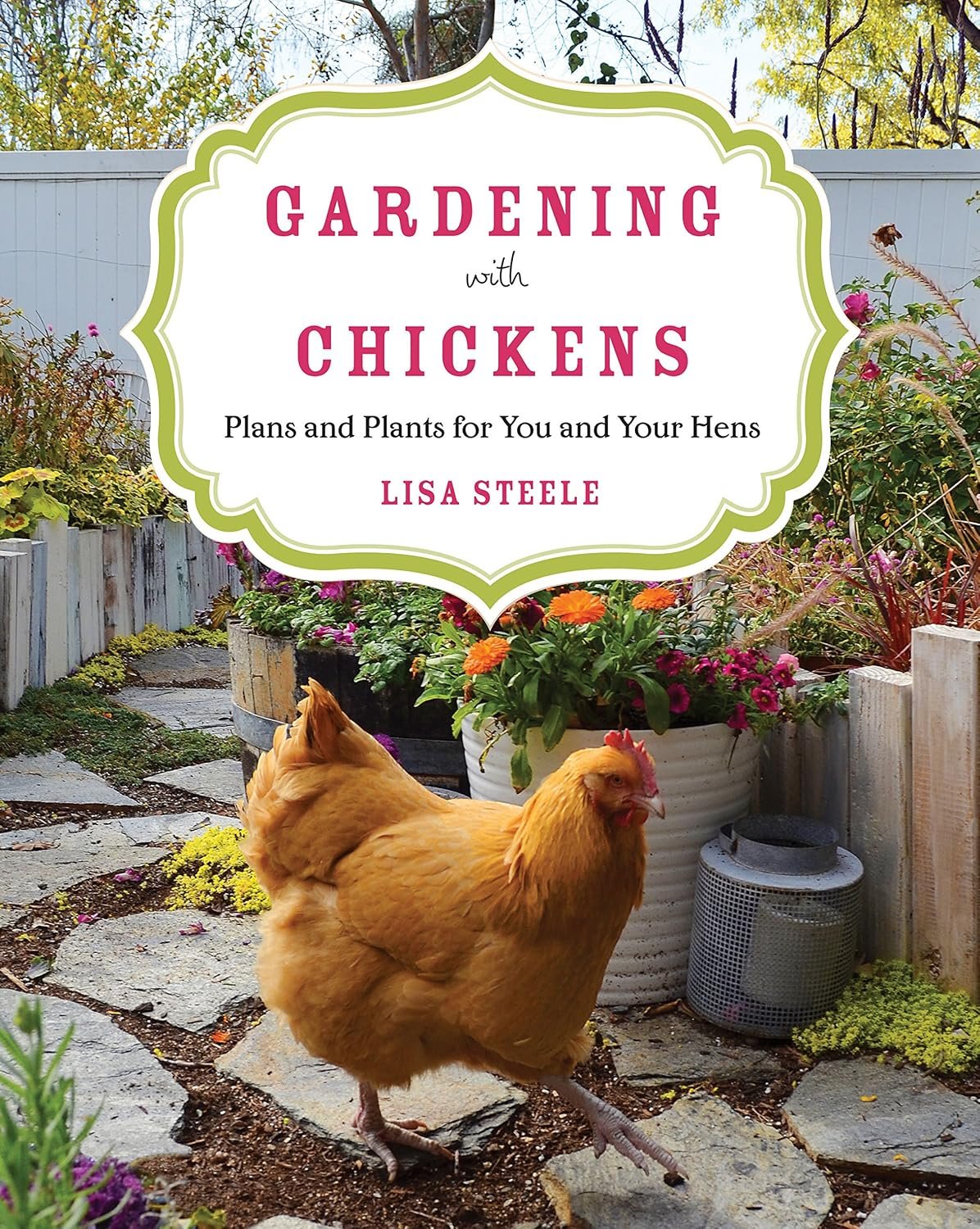
Gardening with Chickens: Plans and Plants for You and Your Hens

Price: $22.99 - $21.70
(as of Jun 29, 2026 02:50:41 UTC – Details)
Welcome to a world where chickens and gardens coexist!
Join Lisa Steele, chicken-keeper extraordinaire and founder of Fresh Eggs Daily, on a unique journey through the garden. Start by planning your garden and learning strategies and tips for keeping your plants safe while they grow. Plant with purpose, choosing from a dozen plans for theme gardens such as Orange Egg Yolks or Nesting Box Herbs. Or choose a design that’s filled with edibles – sharing the bounty with your family and your feathered friends. Then comes the fun part: enjoy the harvest, even let the chickens graze!
Lisa’s friendly writing, together with inspirational photos and illustrations, will have you rolling up your sleeves and reaching for your gardening tools. Lisa also covers a range of topics just for chicken-keepers, including:
– Chickens and composting
– Using chickens to aerate and till
– Coop window boxes
– Plants to avoid when you have chickens
– Lists of the most valuable crops and herbs
– Advice on how to harvest and use many of the plants
– And much more!
Whether you’re an experienced chicken keeper, master gardener, or just getting into these two wonderful hobbies, Gardening with Chickens is an indispensable guide for a harmonious homestead.
From the Publisher

Planning Your Garden’s Location
The first step in creating a garden is siting, or planning the location. When you’re deciding on a location for your garden, you’ll want to consider several factors. The first consideration is the hours of sunlight your garden will need. Most vegetables require at least 6 to 8 hours of sunlight each day, preferably with lots of morning sun, so an east-facing location should give your garden a strong chance of success. If you are in the southern climates, where hot summers and scorching sun can be a challenge for many plants, you’ll want to choose a spot that is partially shaded and protected from the afternoon sun. Further north, a south-facing garden will maximize the sunlight.

Window Boxes And Coop Wall Gardens
Window boxes under your coop windows, house windows, or on a porch railing are another way chickens can benefit from your gardening while keeping your plants safe from the marauders. Window boxes elevate your plants off the ground to keep rabbits, turtles, toads, and other pests from nibbling as well. Attaching planter boxes under your coop windows make it handy for you to snip a handful of fresh herbs as you’re refreshing the coop bedding and toss some into the nesting boxes.
Or go even further with window boxes. Attaching window boxes up the side of your coop is one easy way to get started. Vintage wooden crates attached to a barn or coop wall also make nice planters if you like the rustic look. (I certainly do!) If you don’t want to start screwing planters into the walls of your coop, you can lay boards across the steps of a stepladder and arrange potted plants on the boards. Wooden pallets can be repurposed and stood on one end with small terracotta pots braced on the slats to create an inexpensive tiered garden. In fact, pretty much anything that raises your plants up off the ground to make it harder for your chickens to nibble on them is a good idea. A vertical garden is a wonderful deterrent to keep plants safe from your chickens until the plants are mature.

Herbal Feed Supplement Gardens
Of course, herbs also can enhance your chickens’ diet and environment. While a good-quality layer feed will provide your flock with all the nutrition they need to survive, I believe that supplementing their diet with vitamin-rich herbs and edible flowers helps them thrive. Herbs provide so many benefits in chicken keeping. Adding them to your chickens’ diet—either freshly picked from the garden or dried and added to your chicken feed—helps build strong immune systems, aids in digestion and respiratory health, increases fertility and egg production, and provides a vast array of vitamins and minerals. Chickens that can’t free-range and eat grasses and weeds all day can especially benefit from the addition of herbs in their diet. They provide calcium, protein, potassium, iron, and other necessary nutrients. The more different types of herbs you feed your chickens, the more well-rounded their diet will be, and the healthier they will be. Not only that; their eggs will be more nutritious, with vibrant orange yolks created by the carotenoids found in many herbs.
Publisher : Voyageur Press
Publication date : November 4, 2016
Edition : Illustrated
Language : English
Print length : 176 pages
ISBN-10 : 0760350477
ISBN-13 : 978-0760350478
Item Weight : 2.31 pounds
Dimensions : 8.05 x 0.5 x 10.05 inches
Best Sellers Rank: #72,736 in Books (See Top 100 in Books) #33 in Outdoor & Recreational Area Gardening #66 in Animal Husbandry (Books) #66 in Vegetable Gardening
Customer Reviews: 4.8 4.8 out of 5 stars (535) var dpAcrHasRegisteredArcLinkClickAction; P.when(‘A’, ‘ready’).execute(function(A) { if (dpAcrHasRegisteredArcLinkClickAction !== true) { dpAcrHasRegisteredArcLinkClickAction = true; A.declarative( ‘acrLink-click-metrics’, ‘click’, { “allowLinkDefault”: true }, function (event) { if (window.ue) { ue.count(“acrLinkClickCount”, (ue.count(“acrLinkClickCount”) || 0) + 1); } } ); } }); P.when(‘A’, ‘cf’).execute(function(A) { A.declarative(‘acrStarsLink-click-metrics’, ‘click’, { “allowLinkDefault” : true }, function(event){ if(window.ue) { ue.count(“acrStarsLinkWithPopoverClickCount”, (ue.count(“acrStarsLinkWithPopoverClickCount”) || 0) + 1); } }); });